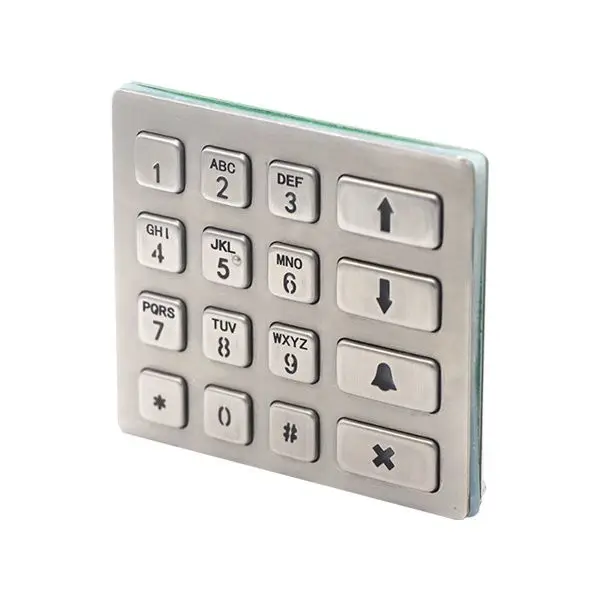
Individuals who are blind or have low vision still need a means of interfacing with a self-service terminal like an ATM, a ticketing kiosk or a public information booth with confidence and independence. That’s where industrial keypads with Braille features come in. The keypads are part of efforts to make public spaces more inclusive and include tactile features with which users are able to feel and navigate around. In adittion to improving everyda access, they also help businesses and organizations to comply with accessibility laws. This sort of thoughtful design isn’t just a matter of avoiding a check on the to-do list, but is about ensuring that everyone gets the same access to services.
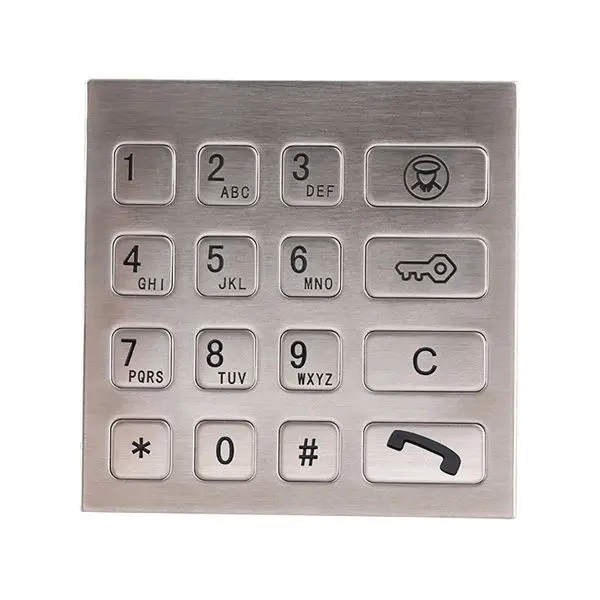
Design and Implementation of Braille on Industrial Keypads.
Putting Braille on industrial keypads isn’t as simple as adding raised dots on a surface. It requires careful design and testing to ensure the keypad is easy to use, durable and actually useful for people who depend on touch to find their way. Every key must also have the correct Braille symbols according to standards typically the ordering of Braille alphabet or numerical characters in the country where the keypad is being installed.
Designers begin by selecting materials that can withstand repeated handling without causing the Braille dots to wear out. Stainless steel is a common option because it can take a beating and resists rust, which is helpful in outdoor or high-traffic spots. The Braille dots are usually cut into the keys with a laser or machined so the dots do not wear away over time. The layout of the keys is also central. “I do find that braille readers are accustomed to patterns and spacing, and so if you vary the feel of the keypad too much, it’s a little bit harder to use,” he said.
While developing, you test for haptic soundness as well as human usability. This could include giving prototypes to blind or low-vision users to see what they think. The keypad should also be flush, or very slightly raised, so that it’s easy to locate by feel, while also protected against the elements and vandals.
Another feature could be lighting. The Braille doesn’t need lighting, of course, but a backlit key pad could be useful to low-vision users, particularly in dark places, such as underground stations or parking garages.
By using strong materials that can take some abuse, designing buttons well, and testing them with actual humans, manufacturers will be able to succeed at making keypads that work for everyone, including those who use touch instead of sight. It’s about including accessibility in the design, rather than tacking it on afterward.
Options: Numeric Braille, 12-Key Braille, Outdoor Braille Keypads.89.
Knowing your Braille Industrial Keypad layout options When selecting a Braille Industrial Keypad, for instance, it is good to know the lay outs available. The ideal choice depends on where and how the keypad will be deployed and by whom. Let’s dissect them into these categories: braille numeric banks, 12-key braille layouts, and outdoor braille banks.
Standard numeric Braille keypads are typically limited to the numbers 0 through 9, which are commonly arranged in three rows of four with a few function keys such as “Enter” or “Cancel.” These devices would be perfect for uncomplicated input operations such as simple PIN entry or access control. There is a raised Braille number for each button to correspond with the printed label.
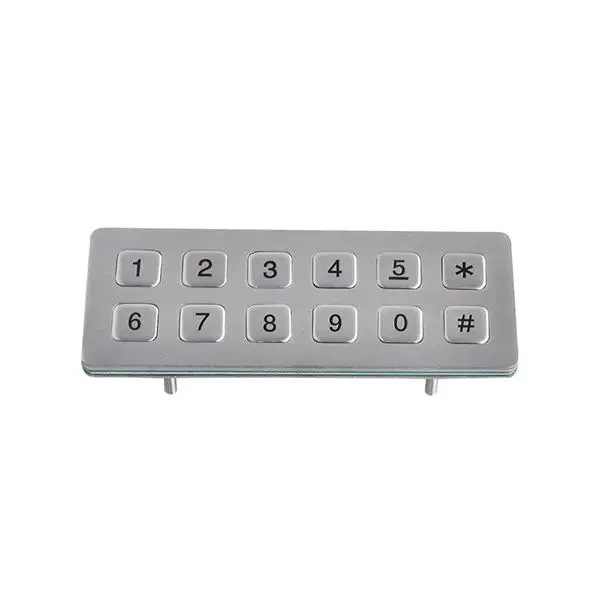
They are popular in kiosks where a phone-style input is needed, such as customer service terminals or intercom systems. The layout is similar to any telephone pad, which most blind people are used to and would learn to use with quick ease.
Outdoor Braille keypads are weather resistant, vandal resistant, and resistant to the elements such as rain, and heat, and still provide a tactile way for disabled individuals to access. Many of these models now have waterproof seals, are made of stainless steel, or incorporate deep-etched or punched Braille that never wears off, he said. Transit systems, parking meters, ATMs, or anything else that is public use and outdoors. Some are even engineered to be used wearing gloves or when wet.
The right keypad type is task and environment dependent. A numeric format might be ideal for secure access points, while a tough outdoor keypad offering full Braille support could be a necessity when it comes to 24/7 public terminals. Make sure the keypad style fits the actual application, always!
Applications: ATMs, Access Control, Information Kiosks, Vending Machines.
More and more we are encountering public machines with braille keypads. These keypads help blind and low-vision people to be able to use the same services and institutions as everyone else. So, what would be the usefulness of Braille industrial keypads?
ATMs were also among the first generation of public machines to switch to Braille-keyed keypads. These machines will be processing private financial transactions, so access and independence are crucial. The keypad is labeled clearly in Braille so that even the internally sight impaired can enter a PIN and make their way through the menu unassisted. A lot of these machines also include voice guidance, and some even have a headphone jack,— but the tactile keypad is still such an important part of the experience.
Access control sistems (think building entrances, parking garages and elevators) are frequently based on a system of numeric input. And, blind users now have a dependable way to input codes and get in a door with a pad with Braille. In buildings with a high level of security, or public access, entry systems are not just a luxury, they are also occasionally required by law.
Kiosks with screens that display information, whether they are in an airport, hospital or government office, can be difficult for blind people to use if they have to, say, interact with touch screens. For others, a Braille keypad serves as a first step towards reaching audio menus or basic information. It’s a means to make the service more fair and just without turning it inside out.
There are vending machines coming, too. However, all of that is frequently stuff — whether a lot of snacks, some drinks or even a ticket — that generally involve a few-presses to select and then pay for something. A hot spot means even blind users can input with confidence, whether in an unfamiliar, crowded place, the column pad is a braille labeling.
On those machines, braille is more than a rule 89 it’s a way millions of people can make life just a little smoother and more equitable.